Why is my house always messy even when I try to keep it clean? This question usually appears after repeated attempts to restore order.
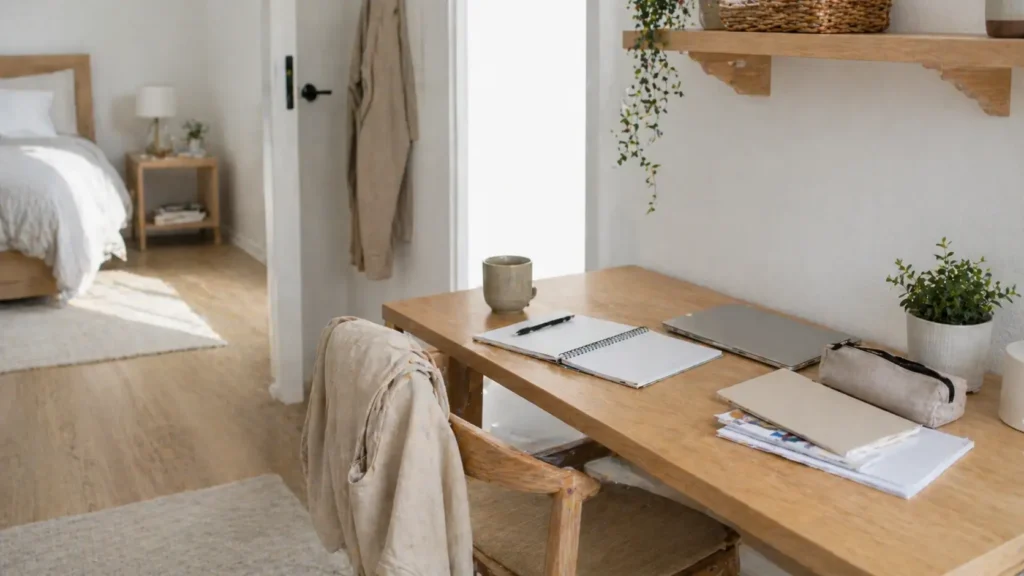
You clean your home.
Not once, but repeatedly.
At certain moments, everything looks under control. Surfaces are clear, objects are in place, and the space feels functional.
A few days later, the same areas begin to shift again.
Items start to accumulate. Surfaces become partially used. The structure you restored begins to fade.
This leads to a recurring question: why is my house always messy, even when consistent effort is applied?
A Pattern That Repeats Quietly
The return of disorder is rarely abrupt.
It develops gradually through small, routine interactions.
- An item is placed temporarily and not returned
- A surface becomes a holding space for multiple functions
- A task is interrupted and left incomplete
Individually, these actions are insignificant.
Collectively, they begin to change how the space behaves.
Over time, the environment adapts to these small inconsistencies.
Why Is My House Always Messy Even After Cleaning?
Cleaning restores a visual state.
It does not necessarily restore a functional structure.
After cleaning, daily use resumes immediately:
- Objects move through the space
- Tasks introduce temporary changes
- Items are handled without a defined return path
If these actions are not absorbed back into the environment, they remain active.
This creates a gradual accumulation that is not always visible at first.
The Difference Between Order and Stability
A home can appear organized without being stable.
Order refers to how a space looks at a specific moment.
Stability refers to how that space responds to ongoing use.
When stability is missing:
- Surfaces are easily disrupted
- Objects lack consistent placement
- Small changes persist instead of resolving
This explains why a cleaning failure pattern can develop, where repeated effort does not lead to lasting results.
How Daily Use Reshapes the Environment
Every home is continuously influenced by behavior.
Movement, routines, and interruptions all contribute to how the space evolves.
When the structure of a home does not align with these patterns:
- Items are placed where they are convenient, not where they belong
- Storage becomes less accessible than temporary surfaces
- Returning items requires additional effort
These small mismatches accumulate over time.
Eventually, they redefine how the space is used.
The Role of Incomplete Actions
A key factor behind ongoing disorder is incompletion.
Actions are started but not fully resolved.
For example:
- Items are moved but not returned
- Surfaces are cleared but not maintained
- Tasks are partially completed
These incomplete actions remain active within the environment.
As more of them accumulate, the home begins to lose coherence.
Why Some Areas Get Messy Faster
Not all spaces behave the same way.
High-use areas tend to accumulate disorder more quickly.
These include:
- Entryways
- Kitchen counters
- Living room surfaces
Because these areas are used frequently, even small inefficiencies can lead to noticeable changes.
Without support structures, they become points of repeated accumulation.
Why Effort Alone Does Not Resolve the Issue
Increasing effort often leads to temporary improvement.
However, without structural support, the same pattern returns.
Effort addresses the visible result.
It does not address how the environment handles daily use.
This creates a cycle where cleaning becomes necessary more often, without reducing the underlying cause.
A Structural Perspective on Why Homes Stay Messy
A home remains messy not because it is unmanaged, but because it lacks alignment.
Alignment refers to how well the environment supports real behavior.
When alignment is present:
- Items are easy to return
- Surfaces recover quickly after use
- Small disruptions are absorbed naturally
When alignment is missing:
- Temporary placements become permanent
- Surfaces accumulate multiple roles
- The system becomes increasingly fragile
Where Structure Begins to Make a Difference
Small structural adjustments can change how a home responds to use.
These adjustments do not require large reorganizations.
They focus on:
- reducing the number of decisions needed
- aligning storage with frequency of use
- maintaining clear functional zones
Over time, these changes reduce accumulation.
A practical example of this approach can be seen in a daily reset system, where key areas are restored regularly to prevent buildup.
What This Means in Practice
Maintaining order becomes less about correction and more about continuity.
Instead of restoring the entire space repeatedly, attention shifts to how the space behaves between those moments.
This reduces the need for large interventions.
It also allows the home to remain closer to a stable state.
Final Thought
When a space supports how it is actually used, maintaining order tends to require less effort over time.