A complete home reset system is the most effective way to move from constant mess to a home that stays under control without repeated effort. Instead of relying on cleaning or motivation, it creates a structure that supports how your home is actually used on a daily basis.
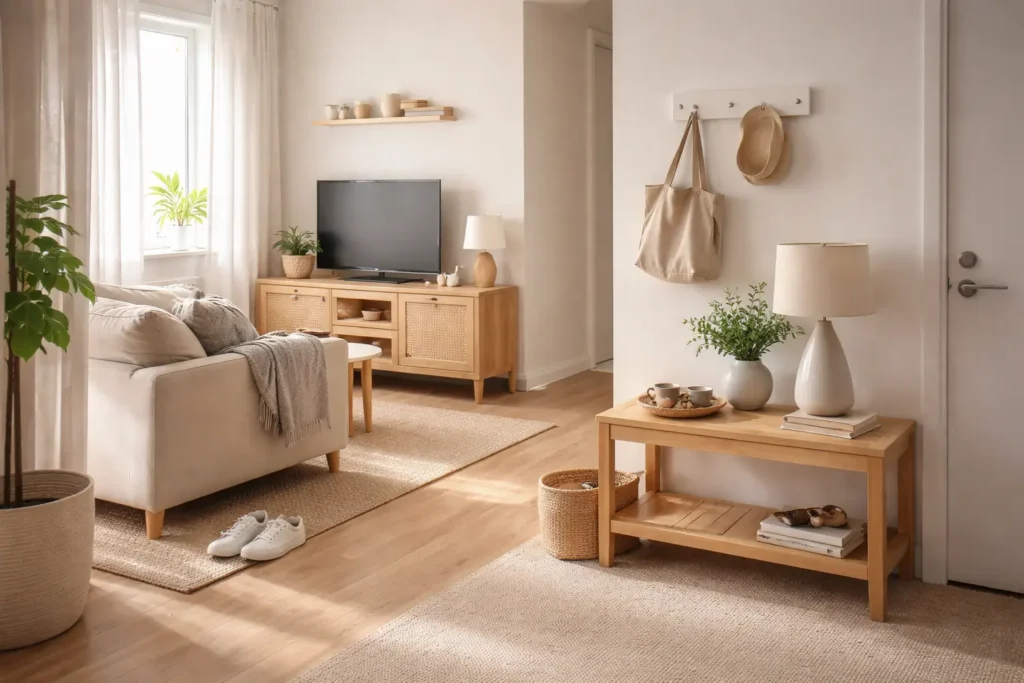
Most homes do not lack effort. They lack integration between use, storage, and maintenance. That gap is what causes the same mess to return again and again.
What Is a Complete Home Reset System?
A complete home reset system is a structured approach that connects:
- how items are used
- where they are stored
- how they return
- how the home resets daily
Instead of reacting to disorder, the system reduces the conditions that create it.
This is what separates temporary organization from lasting control.
Why Most Homes Keep Returning to Mess
A home does not become messy randomly. It follows predictable patterns.
This is the same dynamic explored in why does my house get messy so fast, where recurring mess is a structural outcome—not a behavioral failure.
When structure is missing:
- items have no defined return path
- frequently used objects are stored inefficiently
- surfaces become default storage
- routines fail to maintain consistency
This is the same dynamic explored in
<a href=”/why-does-my-house-get-messy-so-fast/”>why does my house get messy so fast</a>, where recurring mess is a structural outcome—not a behavioral failure.
Why Cleaning and Organizing Alone Don’t Work
Cleaning and organizing are often treated as solutions, but they operate at the surface level.
Cleaning removes visible clutter.
Organizing rearranges where things go.
But neither creates a system that sustains order.
Without structure:
- cleaning becomes temporary
- organizing breaks under daily use
- effort increases over time
This is why the cycle described in why cleaning never lasts keeps repeating, even when effort increases.
The 4 Core Elements of a Complete Home Reset System
A complete home reset system is built on four interconnected elements that work together.
1. Functional Placement
Items must be stored based on real usage—not ideal placement.
When items are located close to where they are used:
- movement becomes efficient
- return becomes natural
- friction decreases
2. Friction Reduction
Every extra step reduces the likelihood of consistency.
A system works when:
- access is immediate
- return is simple
- decisions are minimal
When friction is reduced, behavior aligns automatically with structure.
3. Daily Reset Loop
A short daily reset maintains baseline order before mess accumulates.
This is the foundation of a daily reset system, where small, consistent actions prevent the need for large resets and keep the home under control with minimal effort.
The goal is not cleaning—it is stabilization.
4. Structural Flow
A home should support movement instead of interrupting it.
When layout, storage, and routines align:
- transitions become smoother
- items move predictably
- clutter slows down
This transforms isolated actions into a cohesive system.
How to Apply a Complete Home Reset System
A complete system is implemented gradually, not all at once.
Step 1: Identify Repeating Problem Areas
Focus on areas where mess consistently appears:
- kitchen counters
- entryways
- shared living spaces
These locations reveal structural gaps.
Step 2: Adjust Placement Based on Behavior
Instead of forcing habits, adjust the environment:
- move items closer to use
- simplify storage
- remove unnecessary steps
Step 3: Establish a Reset Rhythm
Create a consistent reset point:
- same time each day
- same sequence
- minimal effort
Even a short reset can maintain stability.
Step 4: Reinforce the System Over Time
Consistency builds strength.
As the system stabilizes:
- fewer corrections are needed
- effort decreases
- results become predictable
Why This Approach Works Better Than Traditional Methods
Traditional methods rely on:
- motivation
- discipline
- periodic deep cleaning
These approaches increase effort but do not improve structure.
A system-based approach:
- reduces decision-making
- aligns environment with behavior
- minimizes long-term effort
That is why it produces more consistent results.
Applying the System to Different Home Types
The same system adapts to different environments.
Small Spaces
In small homes, every inefficiency is amplified.
A structured system:
- prevents rapid accumulation
- optimizes limited space
- reduces visual clutter
Busy Homes
Homes with limited time benefit from:
- faster reset cycles
- simplified structure
- reduced complexity
A well-designed system replaces constant effort with predictable flow.
From Control to Consistency
The purpose of a complete home reset system is not to create perfection.
It is to create consistency.
When the system is working:
- mess builds more slowly
- maintenance becomes lighter
- routines become stable
This creates a home that supports daily life instead of disrupting it.
A More Sustainable Way to Maintain Order
Most people focus on the visible result—clutter.
But sustainable change comes from adjusting the structure behind it.
A complete home reset system connects:
- daily behavior
- physical space
- maintenance patterns
Into a unified system that works continuously in the background.
Conclusion: Building a System That Lasts
A complete home reset system changes the way order is maintained.
Instead of relying on effort, it creates alignment between:
- how your home is used
- how it is organized
- how it is maintained
Once this alignment exists:
- order becomes easier to sustain
- effort becomes more efficient
- your home remains under control over time
The shift is not about doing more.
It is about building something that works.
A structured approach, such as a daily reset method, can make this process significantly easier by providing a clear sequence and reducing the need for constant decision-making.