Maintain a clean home daily is a goal that often feels difficult to sustain.
Not because the actions are complex, but because the process tends to rely on effort rather than consistency.
When maintaining a clean home depends on repeated effort, results rarely last.
A more stable approach comes from understanding how daily patterns influence what happens between cleaning moments.
Why It’s Hard to Maintain a Clean Home Daily
Daily maintenance is often approached as a set of tasks:
- wiping surfaces
- organizing items
- fixing visible clutter
These actions work temporarily.
But they do not address how clutter forms during the day.
This is why many people feel like they are constantly maintaining—but never actually keeping things under control.
This pattern is closely related to what happens in why cleaning never lasts, where repeated effort replaces structural support instead of sustaining results over time.
The Difference Between Cleaning and Maintaining
Cleaning and maintaining are often treated as the same thing.
They are not.
Cleaning:
- removes visible mess
- restores order temporarily
Maintaining:
- prevents accumulation
- supports daily use
- reduces the need for correction
When these two are confused, maintenance becomes reactive instead of preventive.
What Happens Between Cleaning Sessions
Most clutter builds during normal activity.
Not because something is being done wrong, but because everyday actions are not supported by the environment.
Examples include:
- placing items temporarily
- leaving objects in high-use areas
- moving items without returning them
Over time, these small actions accumulate.
This is the same pattern described in why does my house get messy so fast, where clutter builds as a natural result of repeated daily behavior.
Why Daily Maintenance Breaks Down
Maintaining a clean home daily often fails when it depends on:
- memory
- discipline
- available energy
These factors fluctuate.
As a result:
- routines become inconsistent
- tasks are skipped
- clutter builds again
The issue is not the intention.
This becomes much clearer when supported by practical routines, as explained in how to keep your house clean daily, where consistency is built through small, repeatable actions instead of relying on effort alone.
It is the structure supporting it.
A More Sustainable Perspective
Instead of focusing on doing more each day, a more effective approach is to reduce what needs to be done.
This becomes much clearer when you look at how a complete structure works together, as explained in the complete home reset system.
This approach is easier to apply in daily life when supported by practical routines, as shown in keep home clean without overwhelm, where maintaining consistency becomes more sustainable without increasing effort.
This happens when:
- items are easier to return
- spaces reflect actual use
- movement within the home is simplified
These adjustments reduce friction.
And reduced friction improves consistency.
Applying a structured reset approach can make it easier to manage high-use areas without increasing how often you clean.
Simple Ways to Maintain a Clean Home Daily
Daily maintenance becomes easier when actions are small and predictable.
1. Focus on High-Impact Areas
Not every space needs constant attention.
Prioritize:
- kitchen counters
- entry points
- main living surfaces
These areas influence how the home feels overall.
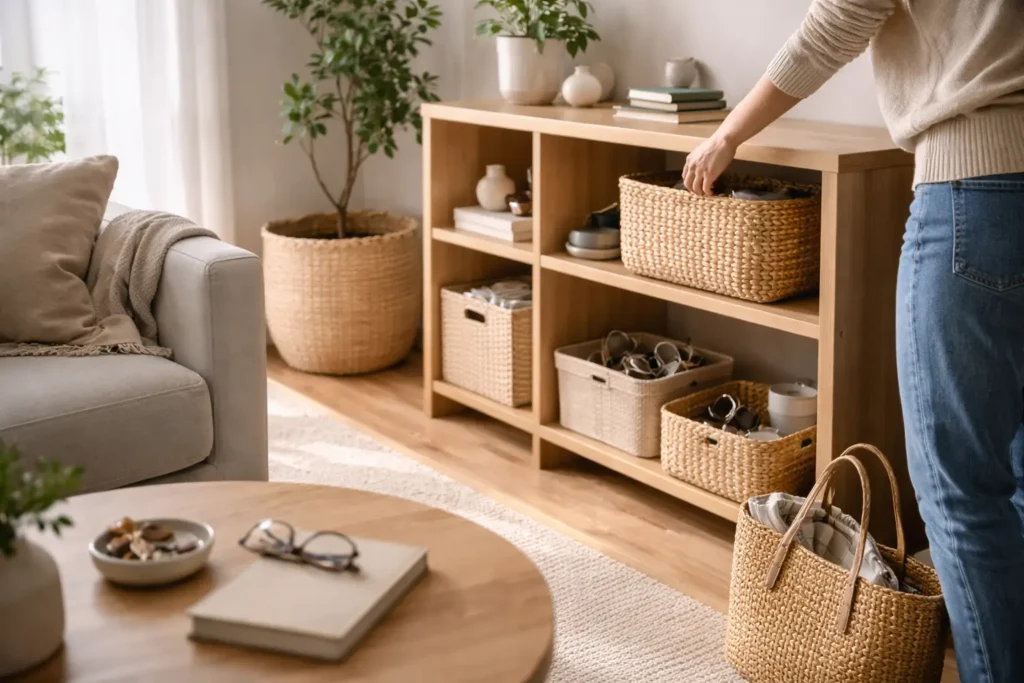
2. Reduce Temporary Placement
Temporary placement is one of the main sources of clutter.
Minimizing it helps prevent accumulation.
This can be done by:
- defining clear drop zones
- avoiding undefined surfaces
3. Keep Storage Close to Use
When storage is too far or difficult to access, items are less likely to return.
Placing storage near where items are used increases consistency.
4. Limit Daily Scope
Trying to maintain everything at once creates pressure.
A better approach is:
- small resets
- focused areas
- limited time
This keeps the process sustainable.
5. Use Short, Consistent Resets
Instead of waiting for clutter to build, small daily resets help maintain stability.
In many cases, this becomes easier when supported by a simple structure like a daily reset system, where small, consistent actions help maintain stability across different areas.
Why This Approach Reduces Stress
Stress often comes from:
- unpredictability
- accumulation
- repeated effort
When maintenance is simplified:
- fewer decisions are required
- actions become automatic
- results become more predictable
This reduces the mental load associated with keeping a home clean.
How to Start Without Overcomplicating
You do not need to change everything at once.
Step 1: Choose One Area
Select a space that:
- is used frequently
- gets messy quickly
Step 2: Apply One Adjustment
For example:
- move items closer
- simplify storage
- reduce steps
Step 3: Observe the Effect
As consistency improves:
- expand gradually
- adjust based on results
What Changes Over Time
When maintenance is aligned with daily use:
- clutter builds more slowly
- cleaning becomes less frequent
- effort becomes more manageable
The home does not stay perfect.
But it remains stable.
Conclusion: Maintaining Without Stress
To maintain a clean home daily, the focus needs to shift from effort to alignment.
When daily actions are supported by the environment:
- maintenance becomes easier
- results last longer
- stress decreases
Small structural adjustments in how your home resets each day can significantly reduce repeated cleaning. In many cases, applying a consistent structure such as a daily reset system helps maintain that stability over time without increasing effort.