A habit to keep home clean daily works best when it maintains order between cleaning sessions instead of trying to fix mess after it builds up.
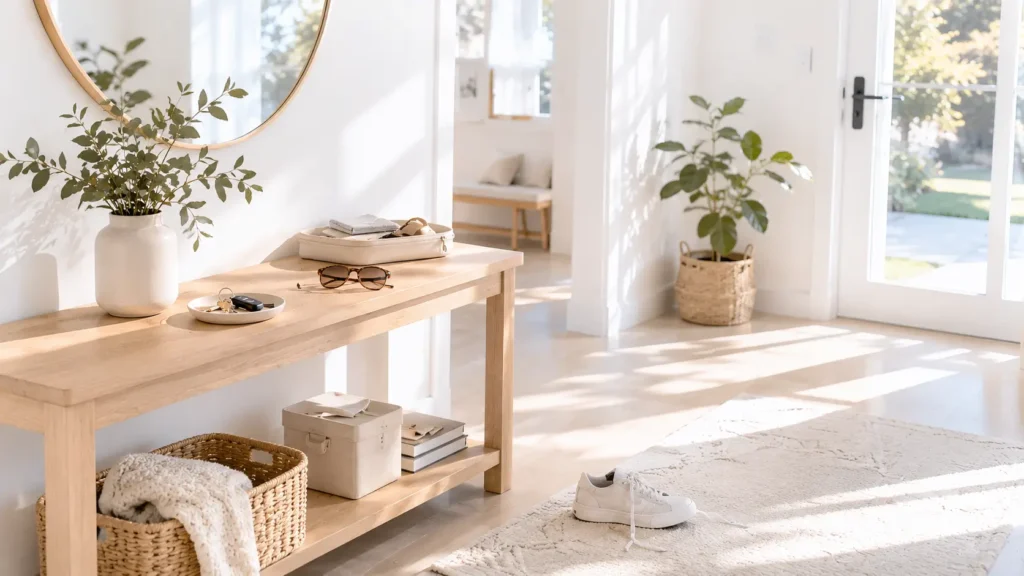
Many homes don’t become disorganized because of neglect.
They lose structure through normal use.
You clean.
You organize.
You reset everything.
Then, gradually, small changes begin:
- items stay out longer than expected
- surfaces begin to hold temporary objects
- small tasks get delayed
Nothing feels dramatic.
But the result is predictable.
Why Most Daily Cleaning Habits Break Down Over Time
Most daily habits are built around action.
You are told to:
- clean something every day
- put things away immediately
- maintain small routines
These actions create short-term results.
But they don’t create stability, often leading to the same friction described in why cleaning feels overwhelming, where even small tasks begin to feel harder to sustain over time.
This leads to the same pattern seen in why cleaning never lasts, where effort is repeated without improving long-term control.
The issue is not whether the habit exists.
It is what the habit is trying to sustain.
Why a Habit to Keep Home Clean Daily Needs Structure
A habit to keep home clean daily cannot rely on effort alone.
Because daily life constantly disrupts the space.
Objects move.
Surfaces are used.
Decisions are postponed.
This creates gradual accumulation — the same pattern explained in why your house gets messy so fast, where disorder builds slowly rather than appearing suddenly.
Without structure, even consistent habits fall behind.
The Habit That Actually Keeps Your Home Clean
The most effective habit is not cleaning more.
It is resetting daily.
Cleaning restores order.
A reset maintains it.
This distinction changes how effort is applied.
Instead of reacting to visible mess, you prevent it from forming.
What a Daily Reset Habit Does Differently
A reset is a short, repeatable process that restores baseline order.
It does not improve the space.
It stabilizes it.
This creates continuity between cleaning sessions.
Instead of:
clean → lose control → restart
You begin to see:
use → reset → maintain
This shift reduces the need for repeated effort.
Where Structure Starts to Change the Outcome
At a certain point, maintaining order becomes easier when the process is predictable.
A practical system like a daily reset system helps reinforce this by aligning daily use with how your home returns to baseline.
This reduces decision-making and makes consistency easier.
How to Apply This Habit in Daily Life
Instead of creating multiple habits, focus on one structured action.
Step 1: Reset High-Impact Surfaces
Focus on visible areas:
- kitchen counters
- coffee tables
- entry surfaces
These areas shape how the entire home feels.
Clearing them restores immediate order.
Step 2: Return Displaced Items
Walk through your main spaces and return items to their place.
Avoid:
- reorganizing
- optimizing
- overthinking
The goal is restoration, not improvement.
Step 3: Stabilize Functional Zones
Check whether key areas are ready:
- kitchen usable
- living space clear
- entryway functional
This ensures the next day starts from a stable state.
Step 4: Stop at Baseline
A reset is not a full routine.
Extending it increases effort.
Keeping it short preserves consistency.
Why This Works Even on Busy Days
A reset works because it fits into real life.
It does not depend on:
- motivation
- time availability
- perfect execution
It works because it is:
- short
- predictable
- repeatable
This makes consistency sustainable.
Why Traditional Habits Feel Ineffective
Many habits focus on doing more.
A reset focuses on maintaining structure.
This difference changes how the home behaves over time.
Instead of constant correction, you maintain stability.
The Long-Term Effect of a Reset Habit
When applied consistently:
- clutter accumulates more slowly
- cleaning becomes lighter
- the home stays closer to baseline
The need for large resets decreases.
Small actions become enough.
Where to Start Without Overcomplicating
Start with:
- one surface
- one room
- one moment in your day
Build consistency first.
Then expand gradually.
Final Thought
A habit to keep home clean daily becomes effective when it is supported by structure, not just effort.
A simple system, such as a daily reset method, can help reduce repetition by creating a clear and consistent way for your home to return to baseline.