Why I can’t keep my house clean is a question that usually appears after repeated effort fails to produce consistent results.
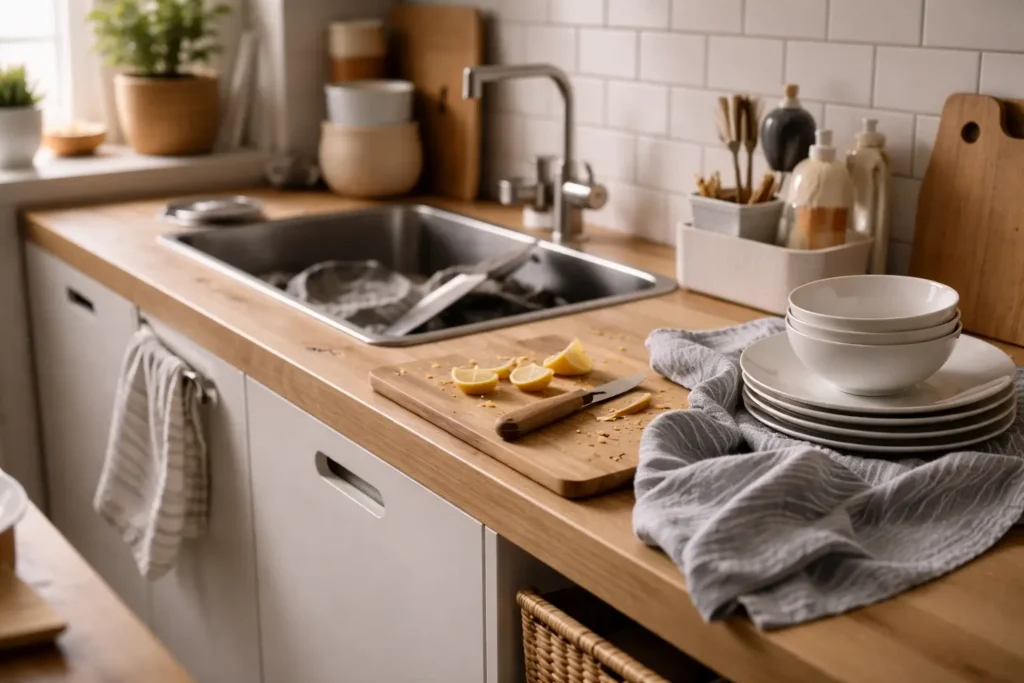
You clean.
You organize.
You try to stay consistent.
For a short time, everything feels under control.
But then, without a clear reason, the same patterns return.
Surfaces fill again.
Items move out of place.
Tasks repeat.
Why I Can’t Keep My House Clean Even When I Try
Cleaning works in the moment.
But it does not define what happens after.
During daily life:
- items are constantly used
- spaces are reused
- routines are interrupted
If nothing supports these actions, the environment gradually loses alignment.
This is why cleaning alone does not hold.
The Difference Between Cleaning and Maintaining
Cleaning removes what is visible.
Maintaining prevents it from returning.
When a home is cleaned:
- clutter is reduced
- surfaces are cleared
- order is restored
But without a structure that supports maintenance, these results are temporary.
What Actually Causes the Mess to Return
Mess does not appear suddenly.
It develops through repeated small actions:
- placing items temporarily
- delaying return
- using spaces without resetting them
These actions are normal.
But when they are not supported by a consistent structure, they accumulate.
This is closely related to what happens in why does my house get messy so fast, where everyday use naturally leads to recurring disorder.
Why Effort Doesn’t Translate Into Results
A common frustration is:
“I’m trying, but it doesn’t stay clean.”
This happens when effort is applied to visible outcomes rather than underlying processes.
When effort is not supported by structure:
- it produces short-term results
- it requires repetition
- it increases over time
This pattern is also explained in why cleaning never lasts, where repeated effort replaces structural support instead of maintaining results.
The Role of Daily Friction
Small obstacles influence behavior more than intention.
For example:
- items stored too far from where they are used
- complicated storage systems
- unclear placement rules
These create friction.
Friction leads to:
- temporary placement
- inconsistent habits
- gradual disorder
Why Some Areas Always Get Messy First
Certain areas consistently lose order faster:
- kitchen counters
- entry surfaces
- shared spaces
These areas experience constant use.
Without a structure that supports continuous activity, they require repeated correction.
A Practical Example
Consider a living space used throughout the day.
Even after cleaning:
- items are brought in
- objects are moved
- surfaces are reused
If there is no system guiding where things go and how they return, the space gradually shifts out of alignment.
Why Consistency Feels Difficult
Consistency is often treated as a behavioral issue.
But in many cases, it is structural.
When maintaining order requires:
- effort
- attention
- decision-making
it becomes difficult to sustain.
A Different Way to Understand the Problem
Instead of focusing on cleaning frequency, it is useful to observe patterns.
Ask:
- where does clutter appear first?
- what items are repeatedly moved?
- where does placement break down?
These patterns reveal the underlying structure.
A Subtle Adjustment That Changes the Outcome
At this point, the issue becomes clearer.
If a home cannot stay clean, it is often because daily activity is not supported by structure.
Small adjustments can reduce friction.
For example:
- simplifying return paths
- aligning storage with use
- reducing unnecessary steps
This becomes clearer when you look at how repetition affects consistency, as explained in why cleaning feels endless, where repeated effort without structural support creates the same cycle over time.
A practical system like a daily reset system can help stabilize these patterns by supporting how your space is used daily.
What Changes When Structure Supports Behavior
When structure aligns with how a home is used:
- actions become easier
- decisions decrease
- consistency improves
This reduces the need for repeated cleaning.
Why the Problem Feels Persistent
The feeling that a home cannot stay clean comes from repetition.
Cleaning restores order.
But without structural support, the same conditions remain.
This leads to:
- recurring effort
- repeated tasks
- limited progress
How to Recognize the Pattern
You may be experiencing this if:
- cleaning does not last
- the same areas get messy repeatedly
- maintaining order feels inconsistent
- effort feels disproportionate to results
These are signs of structural misalignment.
Why Small Changes Often Work Better
Large cleaning sessions create temporary improvement.
But small adjustments often produce more stable results.
Examples include:
- reducing distance between use and storage
- simplifying placement
- limiting unnecessary movement
These reduce friction and improve consistency.
Conclusion: Why You Can’t Keep Your House Clean
Why I can’t keep my house clean is not a question of effort alone.
It is a question of how the environment supports daily activity.
When structure does not align with behavior:
- results do not last
- effort increases
- disorder returns
Understanding this difference changes how the problem is approached.
When a home is supported by a consistent structure, maintaining order becomes more stable and requires less repeated effort.
When a reset structure is in place, maintaining order becomes more consistent without adding complexity to your routine.