Why do I keep cleaning the same things is a question that usually appears after noticing a frustrating pattern: no matter how often you clean certain areas, they seem to get messy again almost immediately.
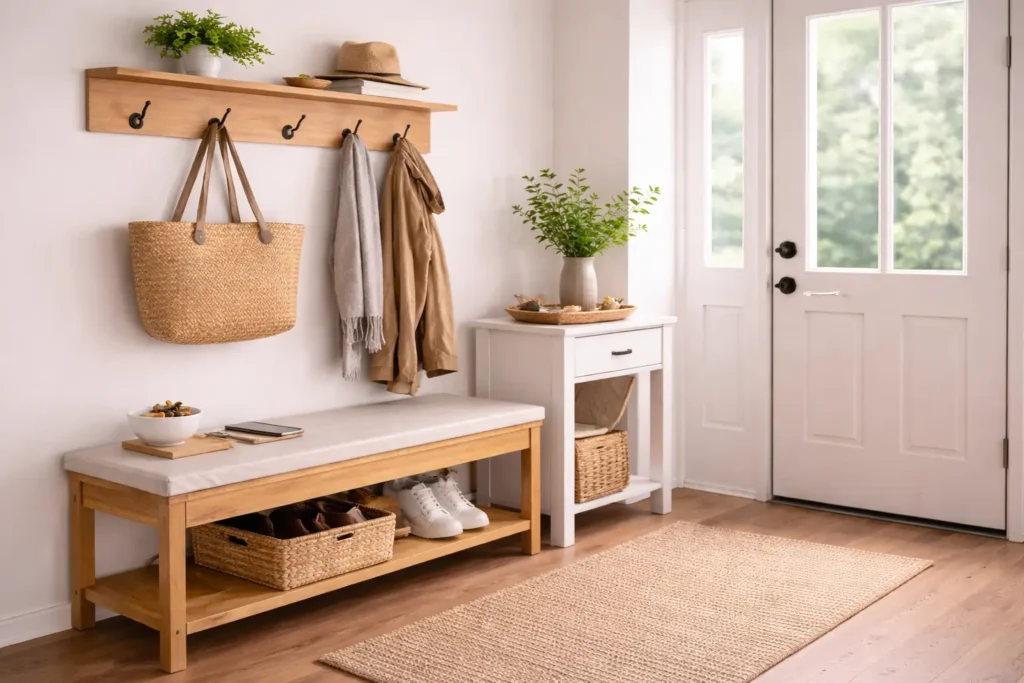
Kitchen counters, entryways, and living room surfaces tend to follow this cycle.
This repetition is not random. It follows a predictable structure.
The Pattern Behind Repeated Cleaning
When the same areas require constant cleaning, it is usually because they are under continuous pressure from daily use.
These areas tend to have three characteristics:
- high frequency of use
- multiple functions
- easy surface access
Because of this, they naturally attract items throughout the day.
Over time, they become accumulation points—not because of neglect, but because of how they are integrated into daily routines.
This is closely related to what happens in why does my house get messy so fast, where repeated mess is driven by structural patterns rather than isolated actions.
Why Do I Keep Cleaning the Same Things (And What Causes It)
Why do I keep cleaning the same things is not about effort—it is about recurring input.
When an area constantly receives:
- objects without a return path
- items without a defined place
- temporary placements that become permanent
It will require continuous cleaning.
In many cases, the surface itself becomes part of the system—just not an intentional one.
Why Cleaning the Same Areas Doesn’t Solve the Problem
Cleaning resets the surface, but it does not change the flow that caused the accumulation.
If nothing changes in how the space is used:
- items will return
- surfaces will fill again
- cleaning will repeat
This is why many people feel stuck in a loop.
This is why many people feel stuck in a loop.
This experience is closely connected to what is described in why I can’t keep my house clean, where repeated effort feels disconnected from lasting results despite consistent attempts.
The issue is not that cleaning is ineffective.
It is that it is disconnected from the system that governs daily use.
This is part of the same cycle explained in why cleaning never lasts, where repeated effort replaces structure and prevents lasting results.
The Most Common Mistake
The instinctive reaction is to clean more often.
- wipe surfaces daily
- reorganize repeatedly
- try to maintain stricter habits
But increasing frequency does not solve the root issue.
It only shortens the cycle.
Without structural adjustment, repetition continues.
A Different Way to Look at the Problem
Instead of asking:
“Why does this area keep getting messy?”
A more useful question is:
“What is this area being used for throughout the day?”
This shift reveals the real function of the space—not the intended one, but the actual one.
What These Areas Are Really Telling You
Repeated cleaning points to a mismatch between:
- how a space is designed
- how it is actually used
For example:
- a kitchen counter may function as food prep + storage + drop zone
- an entryway may function as storage + transition + temporary holding area
When one surface supports too many roles, it becomes overloaded.
The System Adjustment That Changes Everything
To stop cleaning the same areas repeatedly, the goal is not to eliminate use—but to structure it.
This requires three adjustments.
1. Define the Function of the Space
Each surface should have a primary function.
When a surface has no defined role, it becomes a default storage area.
2. Create a Return Path
Items need a clear and accessible place to go after use.
If the return path is unclear or inconvenient, items stay where they are.
3. Reduce Surface Dependency
Surfaces should not carry the burden of storage.
When storage is insufficient or poorly positioned, surfaces compensate.
A Practical Insight (Transition to Solution)
At this point, the pattern becomes easier to see.
If you are cleaning the same areas repeatedly, it is not because those areas are the problem.
They are simply where the system breaks down.
A small structural adjustment can reduce the need for constant cleaning by changing how items move and return throughout the day.
This is where a simple, structured approach—like a daily reset system—can help stabilize these high-pressure areas by creating a clear return flow without increasing effort.
Why This Works Better Than Cleaning More Often
Cleaning treats the visible result.
A system adjusts the underlying flow.
Instead of removing clutter repeatedly, it reduces how often clutter forms.
This leads to:
- fewer resets
- lower effort
- more consistent results
How to Apply This in Your Home
You can start with one area that requires constant cleaning.
Step 1: Observe the Flow
Notice:
- what items appear there
- when they appear
- how often they are used
Step 2: Adjust Placement
Move items closer to where they are used.
Simplify access.
Step 3: Introduce a Reset Moment
Create a short daily reset:
- same time
- same sequence
- minimal effort
Even a few minutes can maintain stability.
This becomes much easier to apply in practice when structured as a repeatable adjustment, as shown in how to stop cleaning the same mess everyday, where small changes reduce repetition and stabilize daily use.
Step 4: Let the System Adapt
As placement improves and friction decreases:
- items return more easily
- surfaces remain clearer
- cleaning becomes less frequent
If you want to apply this more effectively across your home, this approach becomes much clearer when seen as a complete structure, as explained in how to keep your house clean without effort, where small adjustments reduce repetition and make maintenance easier over time.
The Bigger Picture
When you stop cleaning the same areas over and over, something else happens:
- your home becomes easier to manage
- routines become lighter
- mental load decreases
This is not about perfection.
It is about reducing repetition.
Conclusion: How to Stop Cleaning the Same Things
Why do I keep cleaning the same things is not a question of effort.
It is a reflection of how your space is currently functioning.
Cleaning alone cannot fix repeated accumulation.
What changes the outcome is a system that:
- defines how spaces are used
- supports where items go
- stabilizes daily flow
If you want a simple way to apply this consistently,a structured reset approach offers a practical way to maintain consistency that reduces repetition and keeps high-use areas under control without constant effort.